You are subscribed to updates from the Centers for Disease Control and Prevention (CDC).
CDC H1N1 Flu Website Situation Update, March 21, 2010
Key Flu Indicators
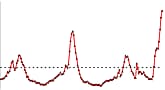
Each week CDC analyzes information about influenza disease activity in the United States and publishes findings of key flu indicators in a report called FluView. During the week of March 7-13, 2010, most key flu indicators remained about the same as during the previous week. Below is a summary of the most recent key indicators:
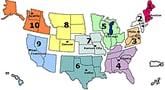
- Visits to doctors for influenza-like illness (ILI) nationally remained stable and ILI remains low nationally. ILI is also looked at by region, and one of 10 U.S. regions is reporting elevated ILI. Elevated ILI was seen in region 4. Region 4 is comprised of Alabama, Florida, Georgia, Kentucky, Mississippi, North Carolina, South Carolina, and Tennessee.
- Laboratory-confirmed hospitalizations rates have leveled off and very few hospitalizations were reported by states during the week ending March 13.
- The proportion of deaths attributed to pneumonia and influenza (P&I) based on the 122 Cities Report decreased over last week and in general remains low. Two flu-related pediatric deaths were reported this week. One death was associated with 2009 H1N1 virus infection and the remaining death was associated with an influenza A virus for which the subtype was undetermined. Since April 2009, CDC has received reports of 331 laboratory-confirmed pediatric deaths: 278 due to 2009 H1N1, 51 pediatric deaths that were laboratory confirmed as influenza A, but the flu virus subtype was not determined, and two pediatric deaths that were associated with seasonal influenza viruses. (Laboratory-confirmed deaths are thought to represent an undercount of the actual number. CDC has provided estimates about the number of 2009 H1N1 cases and related hospitalizations and deaths.
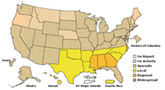
- No states reported widespread influenza activity. Three states reported regional influenza activity. They are: Alabama, Georgia and Mississippi.
- The majority of the influenza viruses identified so far continue to be 2009 H1N1 influenza A viruses. These viruses remain similar to the virus chosen for the 2009 H1N1 vaccine, and remain susceptible to the antiviral drugs oseltamivir and zanamivir with rare exception. Some influenza B viruses are circulating at low levels, and these viruses remain similar to the influenza B virus component of the 2009-10 seasonal flu vaccine.
*All data are preliminary and may change as more reports are received.
U.S. Situation Update
U.S. Patient Visits Reported for Influenza-like Illness (ILI)
U.S. Influenza-like Illness (ILI) Reported by Regions
| Cases Defined by | Hospitalizations | Deaths | |
|---|---|---|---|
| Influenza Laboratory-Tests** | 41,322 | 2,061 | |
| *Reports can be based on syndromic, admission or discharge data, or a combination of data elements that could include laboratory-confirmed and influenza-like illness hospitalizations. *Laboratory confirmation includes any positive influenza test (rapid influenza tests, RT-PCR, DFA, IFA, or culture), whether or not typing was done. The table shows aggregate reports of all laboratory confirmed influenza hospitalizations and deaths (including 2009 H1N1 and seasonal flu) since August 30, 2009 received by CDC from U.S. states and territories**. This table will be updated weekly each Friday at 11 a.m. For the 2009-2010 influenza season, states are reporting based on new case definitions for hospitalizations and deaths effective August 30, 2009. CDC will continue to use its traditional surveillance systems to track the progress of the 2009-2010 influenza season. For more information about influenza surveillance, including reporting of influenza-associated hospitalizations and deaths, see Questions and Answers: Monitoring Influenza Activity, Including 2009 H1N1. The number of 2009 H1N1 hospitalizations and deaths reported to CDC from April – August 2009 is available on the Past Situation Updates page. For state level information, refer to state health departments. International Human Cases of 2009 H1N1 Flu Infection **States report weekly to CDC either 1) laboratory-confirmed influenza hospitalizations and deaths or 2) pneumonia and influenza syndrome-based cases of hospitalization and death resulting from all types or subtypes of influenza. Although only the laboratory confirmed cases are included in this report, CDC continues to analyze data both from laboratory confirmed and syndromic hospitalizations and deaths. | |||
| Date Reported | Laboratory-Confirmed 2009 H1N1 Influenza Pediatric Deaths | Laboratory-Confirmed Influenza A Subtype Unknown Pediatric Deaths | Laboratory-Confirmed Seasonal Influenza | Total |
|---|---|---|---|---|
| This Week (Week 10, March 7-13, 2010) | 1 | 1 | 0 | 2 |
| Since August 30, 2009 | 218 | 48 | 1 | 267 |
| Cumulative since April 26, 2009 | 278 | 51 | 2 | 331 |
| This table is based on data reported to CDC through the Influenza-Associated Pediatric Mortality Surveillance System. Influenza-associated deaths in children (persons less than 18 years) was added as nationally notifiable condition in 2004. For more information about influenza-associated pediatric mortality, see FluView. | ||||
For more information about the U.S. situation, see the CDC H1N1 Flu U.S. Situation page.
International Situation Update
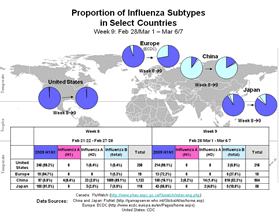
This report provides an update to the international flu situation using data collected through March 14, 2010, and reported by the World Health Organization (WHO) on March 19. WHO continues to report laboratory-confirmed 2009 H1N1 flu cases and deaths on its Web page. These laboratory-confirmed cases represent a substantial underestimation of total cases in the world, as most countries focus surveillance and laboratory testing only on people with severe illness.
In nearly all countries of the world where influenza virus infections have been reported, the 2009 H1N1 virus continues to predominate among all subtyped influenza A viruses. Based on FluNet data collected by 28 countries from February 28 to March 6, 2010, 90.2% of all subtyped influenza A viruses were 2009 H1N1 positive. Among specimens that tested positive for influenza, 34.0% were typed as influenza A and 66.0% as influenza B.
Transmission of 2009 H1N1 virus continues to be the most active in Southeast Asia and West Africa. Limited data suggests that influenza activity may also be increasing in certain areas of the Caribbean and Central America. Low levels of 2009 H1N1 influenza activity continue to circulate across South and Southeast Europe and East, West, and South Asia. Although 2009 H1N1 virus continues to be the predominant influenza virus circulating worldwide, seasonal influenza B viruses are predominate in East Asia, and have been detected at low levels across Southeast Asia and Eastern Africa. 2009 H1N1 activity remains low in the temperate zone of the Southern Hemisphere.
For more information about the international situation, see the CDC H1N1 Flu International Situation page.
Recent Updates of Interest
- UPDATE: 2009 H1N1 Flu International Situation Update
This report provides an update to the international situation as of March 19, 2010. The World Health Organization (WHO) continues to report updated 2009 H1N1 flu-associated laboratory-confirmed cases and deaths on its Web page. - NEW: Everyday Preventive Actions That Can Help Fight Germs, Like Flu
Flyer summarizing everyday preventive actions that can help slow the spread of germs that cause respiratory illness, like flu. - UPDATE: Weekly FluView Map and Surveillance Report for Week Ending March 13, 2010
During week 10 (March 7-13, 2010), influenza activity remained at approximately the same levels as last week in the U.S. 200 (5.6%) specimens tested by U.S. World Health Organization (WHO) and National Respiratory and Enteric Virus Surveillance System (NREVSS) collaborating laboratories and reported to CDC/Influenza Division were positive for influenza. - UPDATE: Influenza and Pneumonia-Associated Hospitalizations and Deaths from August 30, 2009 to March 13, 2010
FluView reports that for the week of March 7-13, 2010, flu activity in the United States was relatively low, with most flu continuing to be caused by 2009 H1N1. Flu activity, caused by either 2009 H1N1 or seasonal flu viruses, may rise and fall, but is expected to continue for weeks. It's possible that the United States could experience another wave of flu activity caused by either 2009 H1N1 or seasonal influenza. - NEW: Question & Answer: Morbid Obesity as a Risk Factor for Hospitalization and Death due to 2009 H1N1.
This document provides updated information on obesity and morbid obesity as risk factors for serious 2009 H1N1-related complications based on findings from recent studies.
Additional Updates on the CDC H1N1 Flu Website
To learn about other recent updates made to the CDC H1N1 Flu Website, please check the "What's New" page on the CDC H1N1 Flu website.
Get H1N1 Updates & Health Tips via Text Message
 Sign up to get health updates sent via text message. Messages are sent about three times a week with relevant H1N1 flu updates and timely health tips.
Text UPDATES to 87000 to sign up.
To learn more, see www.cdc.gov/mobile.
Modify/Update Subscriber Preferences | Unsubscribe | Send Feedback | Learn more about CDC Email Updates
To receive the latest news for your region, please update your profile with your country, state and zip code.
Questions or problems? Please contact support@govdelivery.com.
 | Fight Flu with Facts! • Visit Flu.gov
|  |
Centers for Disease Control and Prevention (CDC) · 1600 Clifton Rd · Atlanta GA 30333 · 800-CDC-INFO (800-232-4636)

0 comments:
Post a Comment