You are subscribed to updates from the Centers for Disease Control and Prevention (CDC).
Key Flu Indicators
Each week CDC analyzes information about influenza disease activity in the United States and publishes findings of key flu indicators in a report called FluView. During the week of September 13-19, 2009, a review of the key indicators found that influenza activity continued to increase in the United States compared to the prior weeks. Below is a summary of the most recent key indicators:
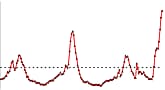
- Visits to doctors for influenza-like illness (ILI) are increasing nationally. Visits to doctors for influenza-like illness are higher than what is expected during this time of year and have increased for six consecutive weeks now. This is very unusual for this time of year.
- Total influenza hospitalization rates for adults and children are similar to or lower than seasonal influenza hospitalization rates depending on age group, but are higher than expected for this time of year.
- The proportion of deaths attributed to pneumonia and influenza (P&I) based on the 122 Cities Report was low and within the bounds of what is expected at this time of year. However, 49 pediatric deaths related to 2009 H1N1 flu have been reported to CDC since April 2009, including three deaths reported this week.
- Twenty-six states are reporting widespread influenza activity at this time. They are: Alabama, Alaska, Arizona, Arkansas, California, Colorado, Delaware, Florida, Georgia, Illinois, Kansas, Kentucky, Louisiana, Maryland, Minnesota, Mississippi, Nevada, New Mexico, North Carolina, Oklahoma, Pennsylvania, South Carolina, Texas, Tennessee, Virginia, and Washington. Any reports of widespread influenza activity in September are very unusual.
- Almost all of the influenza viruses identified so far are 2009 H1N1 influenza A viruses. These viruses remain similar to the viruses chosen for the 2009 H1N1 vaccine, and remain susceptible to the antiviral drugs oseltamivir and zanamivir with rare exception.
U.S. Situation Update

U.S. Patient Visits Reported for Influenza-like Illness (ILI)
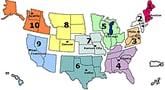
U.S. Influenza-like Illness (ILI) Reported by Regions
| Cases Defined by | Hospitalizations | Deaths | |
|---|---|---|---|
| Influenza and Pneumonia Syndrome* | 8,392 | 822 | |
| Influenza Laboratory-Tests** | 690 | 114 | |
| Totals: | 10,082 | 936 | |
| *Reports can be based on syndromic, admission or discharge data, or a combination of data elements that could include laboratory-confirmed and influenza-like illness hospitalizations. **Laboratory confirmation includes any positive influenza test (rapid influenza tests, RT-PCR, DFA, IFA, or culture), whether or not typing was done. This table is based on data from a new influenza and pneumonia hospitalizations and deaths web-based reporting system that will be used to monitor trends in activity. This is the third week of data from this new system. The table shows aggregate reports of all influenza and pneumonia-associated hospitalizations and deaths (including 2009 H1N1 and seasonal flu) since August 30, 2009 received by CDC from U.S. states and territories. This table will be updated weekly each Friday at 11 a.m. For the 2009-2010 influenza season, states are reporting based on new case definitions for hospitalizations and deaths effective August 30, 2009. CDC will continue to use its traditional surveillance systems to track the progress of the 2009-2010 influenza season. For more information about influenza surveillance, including reporting of influenza-associated hospitalizations and deaths, see Questions and Answers: Monitoring Influenza Activity, Including 2009 H1N1. The number of 2009 H1N1 hospitalizations and deaths reported to CDC from April – August 2009 is available on the Past Situation Updates page. For state level information, refer to state health departments. International Human Cases of 2009 H1N1 Flu Infection | |||
For more information about the U.S. situation, see the CDC H1N1 Flu U.S. Situation Update page.
International Situation Update
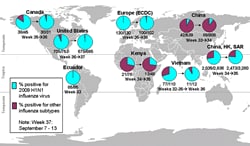
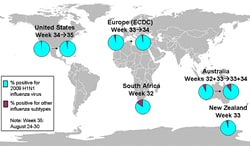
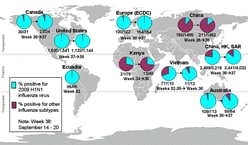 This report provides an update to the international situation as of September 25, 2009. As of September 20, 2009, the World Health Organization (WHO) regions have reported at least 318,925 laboratory-confirmed cases of 2009 H1N1 with more than 3,917 deaths, which is an increase of at least 22,454 cases and more than 431 deaths since September 13th. The laboratory-confirmed cases represent a substantial underestimation of total cases in the world, as many countries focus surveillance and laboratory testing only on people with severe illness. The 2009 H1N1 influenza virus continues to be the dominant influenza virus in circulation in the world. From April 19 to September 12, 2009, 60.6% of influenza specimens reported to WHO were 2009 H1N1 viruses. In temperate regions of the Southern Hemisphere, disease due to 2009 H1N1 is largely declining. In tropical regions, there is still substantial disease due to 2009 H1N1. In temperate regions of the Northern Hemisphere, there is increased influenza like illness (ILI) activity due to 2009 H1N1, including in most of the United States, parts of Mexico and some countries in Europe.
For more information about the international situation, see the CDC H1N1 Flu International Situation Update page.
CDC Launches H1N1 Flu Mobile Texting Pilot
 Sign up now to have important CDC information about H1N1 flu and other topics delivered directly to your mobile phone! In September 2009, CDC launched a three-month text messaging campaign pilot to share important, timely health information directly to users.
To subscribe to the pilot, text HEALTH to 87000. Subscribers can expect to receive about three health messages a week during the three-month pilot. Standard text messaging rates will apply. For more information about the pilot, visit http://www.cdc.gov/mobile.
Recent Updates of Interest
- Flyer: 2009 H1N1 and Seasonal Flu: What To Do If You Get Sick (PDF)
- UPDATE: Brochure: CDC Says “Take 3” Steps To Fight The Flu (PDF)
- Weekly FluView Map and Surveillance Report for Week Ending September 19, 2009
During week 37 (September 13-19, 2009), influenza activity remained stable in the United States; however, there were still higher levels of influenza-like illness than is normal for this time of year. - Questions and Answers: Use of Antiviral Medicines for the Treatment and Prevention of Flu among Pregnant Women for the 2009–2010 Season
Pregnant women who are healthy have had severe illness from the 2009 H1N1 flu (also called “swine flu”). Compared with people in general, pregnant women with 2009 H1N1 flu have been more likely to be admitted to hospitals. Some pregnant women have died. For this reason, CDC advises doctors to give antiviral medicines that treat 2009 H1N1 flu to pregnant women who have symptoms of flu. - 2009 H1N1 Flu: International Situation Update
This report provides an update to the international situation as of September 25, 2009. As of September 22, 2009, the World Health Organization (WHO) regions have reported more than 318,925 laboratory-confirmed cases of 2009 H1N1 influenza virus (2009 H1N1) with at least 3,917 deaths. - U.S. Influenza and Pneumonia-Associated Hospitalizations and Deaths from September 13-19, 2009
As of 11:00 AM ET on September 25, 2009, CDC is reporting 10,082 hospitalizations and 936 deaths. This is the third week of data from this new system. This reports all influenza and pneumonia-associated hospitalizations and deaths (including 2009 H1N1 and seasonal flu) since August 30, 2009 received by CDC from U.S. states and territories. - Update: Translations for Action Steps for Parents if School is Dismissed or Children are Sick and Must Stay Home
Arabic, French, and Russian translations added. - Update: Translations for Preparing for the Flu: A Communication Toolkit for Institutions of Higher Education
Arabic, French, and Russian translations added for "STOP! Do You Feel Sick?" poster. - Update: Translations for Emergency Use Authorization of Tamiflu (oseltamivir)
Arabic, French, and Russian translations added for Fact sheet for patients and parents. - Update: Translations for Action Steps for Parents to Protect Your Child and Family from the Flu this School Year
Arabic, French, and Russian translations added. - Update: Translations for Action Steps for Parents of Children at High Risk for Flu Complications
Arabic, French, and Russian translations added. - UPDATE Translations for School-Located Vaccination Planning Materials and Templates
Arabic, Traditional Chinese, Russian, and Vietnamese translations added. - H1N1 Flu (Swine Flu): Preparedness Tools for Professionals
This page provides resources to help hospital administrators and state and local health officials respond to the H1N1 flu pandemic. - Update: Questions & Answers: Antiviral Drugs, 2009-2010 Flu Season
On September 22, 2009 CDC updated its recommendations for the use of influenza antiviral medicines to provide additional guidance for clinicians in prescribing antiviral medicines for treatment and prevention (chemoprophylaxis) of influenza during the 2009-2010 flu season. These recommendations are intended to help clinicians prioritize use of antiviral drugs for treatment and prevention of influenza. - CDC Launches H1N1 Flu Mobile Texting Pilot
Sign up now to have important CDC information about H1N1 flu and other topics delivered directly to your mobile phone! In September 2009, CDC launched a three-month text messaging campaign pilot to share important, timely health information directly to users. - Brochure: "2009 H1N1 Flu and You"
How does 2009 H1N1 flu spread? How long can a sick person spread 2009 H1N1 flu to others? How severe is illness associated with this 2009 H1N1 flu virus?and more... - 2009-2010 Influenza Season: Information for Pharmacists
As of September 18, 2009 influenza activity is increasing in most of the United States with 21 states reporting widespread influenza activity. So far, most influenza viruses isolated are 2009 H1N1 flu (sometimes called "swine flu"), the virus that has been declared pandemic by the World Health Organization. CDC expects both 2009 H1N1 flu and seasonal flu to cause illness, hospital stays and deaths this influenza season and while influenza is unpredictable, it’s possible the United States could experience an early, prolonged and severe influenza season. - Updated Interim Recommendations for the Use of Antiviral Medications in the Treatment and Prevention of Influenza for the 2009-2010 Season
Includes updated guidance on the use of antiviral agents for treatment and chemoprophylaxis of influenza including 2009 H1N1 influenza infection and seasonal influenza. - H1N1 Clinicians Questions and Answers
Who is recommended to receive the 2009 H1N1 flu vaccine? How should providers prioritize among the initial target groups recommended by ACIP? How will the 2009 H1N1 vaccine flow from manufacturers to providers? More... - Updated: Questions & Answers Novel H1N1 Influenza Vaccine
New question added: What will be the recommended interval between the first and second dose for children 9 years of age and under? What will be the recommended interval between the first and second dose for children 9 years of age and under? Can seasonal vaccine and novel H1N1 vaccine be administered at the same time?
Additional Updates on the CDC H1N1 Flu Website
To learn about other recent updates made to the CDC H1N1 Flu Website, please check the "What's New" page on the CDC H1N1 Flu website.
Modify/Update Email Preferences | Unsubscribe | Send Feedback | Learn more about CDC Email Updates
To receive the latest news for your region, please update your profile with your country, state and zip code.
Questions or problems? Please contact support@govdelivery.com.
  | | |
Centers for Disease Control and Prevention (CDC) · 1600 Clifton Rd · Atlanta GA 30333 · 800-CDC-INFO (800-232-4636)